
Before the Alarm: What Emergency Preparedness Looks Like for Your Building Systems
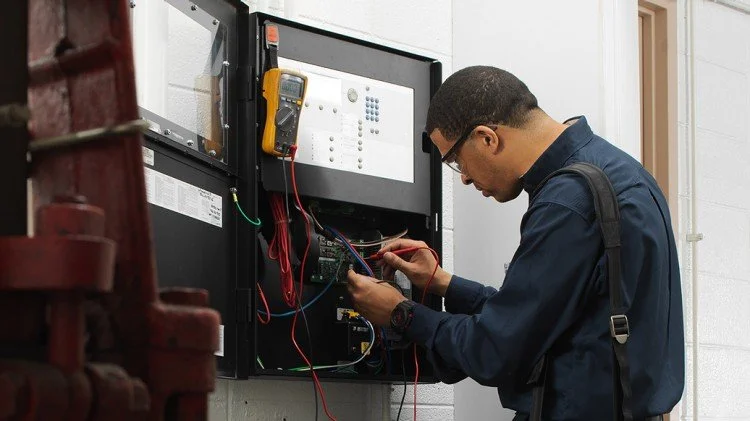
When we talk about emergency preparedness, most of the conversation naturally focuses on people.
Who needs to be notified? Where should they go? What happens during an evacuation, lockdown, severe weather event, or other emergency?
Those plans are important. But they also rely on something that's much easier to take for granted: the systems throughout the building that are expected to support the response.
A fire alarm needs to activate and communicate clearly. An emergency message needs to reach the people who need it. Access control, monitoring, and other security systems need to respond as expected.
Most of the time, these systems simply run in the background. That's exactly what they're supposed to do. But it can also make them easy to overlook until something changes—or something goes wrong.
During National Preparedness Month, it's worth looking beyond the emergency plan and considering whether the systems behind it are ready, too.
Preparedness Happens on Ordinary Days
There's a lot of unremarkable work behind a building that's prepared for an emergency.
It's the fire alarm inspection scheduled months in advance. The device that's tested even though no one has reported a problem with it. The trouble signal that gets investigated instead of repeatedly reset. It's updating an emergency contact after an employee leaves or addressing a door that's started behaving differently.
None of those things feels particularly urgent on a normal Tuesday.
That's the point.
Routine inspections, testing, and preventive maintenance give facility teams an opportunity to find problems while they're still just problems—not problems happening in the middle of an emergency.
We see that work firsthand with our own inspection team. This summer, Communication Company inspectors Mike Kirk, Gabe Goodger, and Isaiah Clark took us behind the scenes as they worked through the busy school inspection season. Their days involved plenty of testing and documentation, but also communication with facility teams and helping customers better understand the systems in their buildings.
That work may happen behind the scenes, but it's an important part of preparedness.
A Plan Is Only as Useful as Your Ability to Communicate It
The same is true for emergency communications.
A school can have a clear lockdown procedure, but people throughout the campus still need to receive the message. A hospital may have a detailed emergency response plan, but communication has to work across patient rooms, clinical spaces, public areas, and departments. A manufacturing facility may need to reach employees working across offices, production areas, warehouses, or different shifts.
The technology looks different from one building to another. The need doesn't: people need clear information when something is happening.
That's why preparedness should include looking at how fire alarm, paging, mass notification, access control, monitoring, and other systems actually work within the day-to-day reality of a facility—not just how they're supposed to work on paper.
Buildings change over time, too. Rooms get repurposed. Teams move. New equipment is installed. Technology ages. Even small changes can affect how people interact with the systems around them.
A system that was right for a building five years ago shouldn't automatically be assumed to meet every need today.
Know What Happens Next
Preparedness doesn't end when an alarm activates.
For monitored systems, that signal may be the beginning of a larger response. Depending on the system and service, that can include verification, notifying the appropriate authorities, and contacting designated people within the organization.
It's a good process to understand before you need it.
Are the right people still listed as emergency contacts? Does your team know what happens when an alarm comes in after hours? Are recurring system issues being addressed, or have they simply become part of the routine?
These aren't complicated questions, but they can reveal where a little attention now could make a meaningful difference later.
Before the Alarm
No organization can prepare for every possible scenario. Emergency preparedness isn't about trying to predict what will happen next.
It's about taking care of the things you can control.
Keep critical systems inspected and tested. Address problems when they appear. Make sure emergency communications still fit the way your facility actually operates. Know what happens when an alarm is received. And revisit those things as your building, technology, and people change.
Because the middle of an emergency is a difficult time to learn something about your building that you could have learned beforehand.
Keep Your Critical Systems Ready
Communication Company supports healthcare facilities, schools, commercial and industrial organizations with inspections and testing, emergency communications, monitoring, preventive maintenance, and ongoing system support.
Through ComCare Managed Services, our team can help keep the life safety, security, and communication systems you depend on ready throughout the year.
