
CASE STUDY: How Keller ISD Centralized Emergency Communication Across 43 Campuses
When a school district grows, communication complexity grows with it.
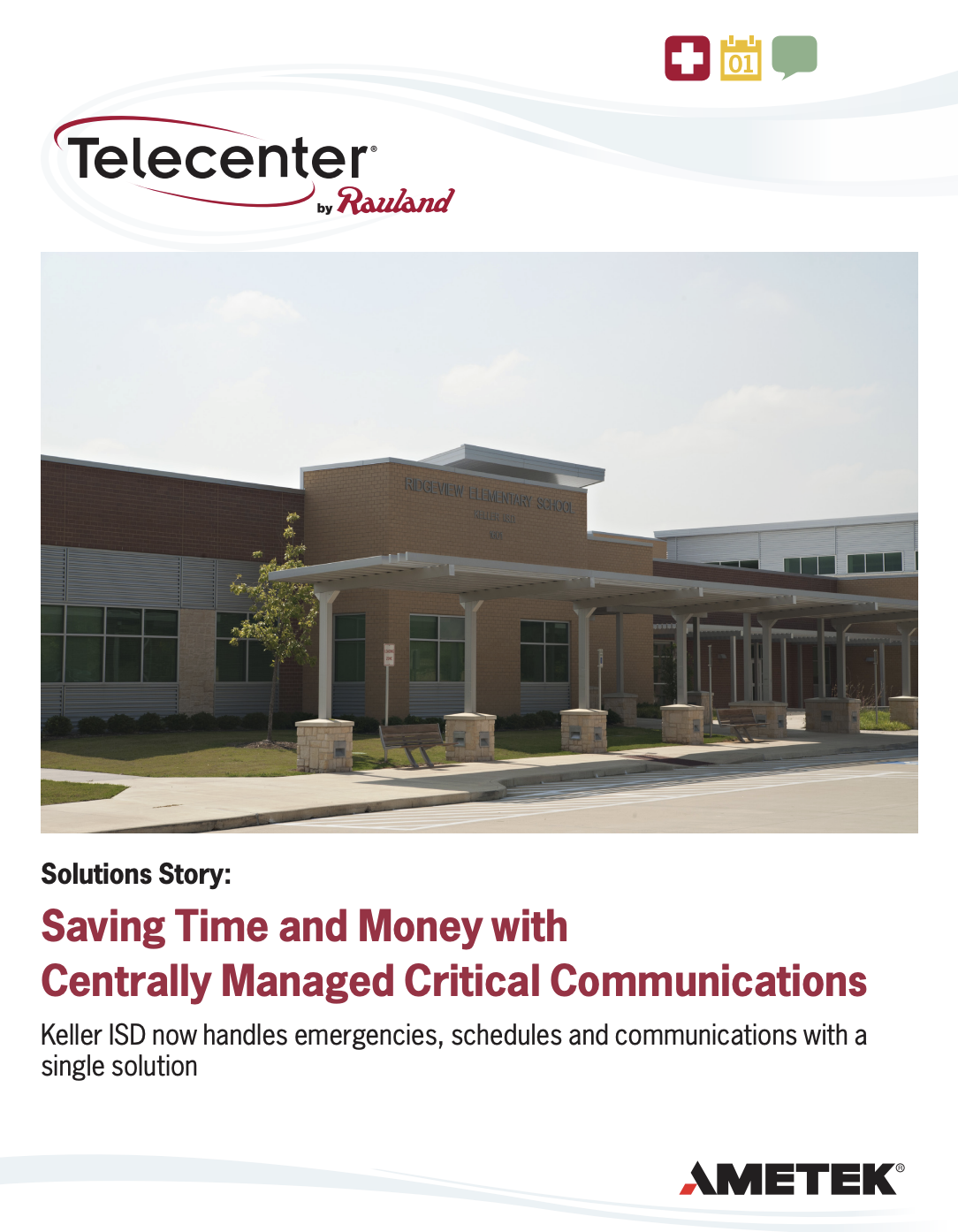
For Keller Independent School District in Texas, serving more than 34,000 students across 43 campuses, managing daily schedules and emergency communication through disconnected systems was no longer sustainable.
The district needed more than an upgrade.
They needed integration.
The Challenge: Disconnected Campuses, Manual Processes
Before implementing a centralized platform, Keller ISD managed bell schedules and communications campus by campus. Schedule changes required technicians to physically visit each location. Emergency coordination lacked district-wide visibility. Documentation of drills and incidents required manual effort.
As expectations around school safety increased, so did the demand for consistency and speed.
The district began asking the right questions:
How can we manage emergency communication district-wide?
How can we initiate lockdowns faster?
How can we document drills and events more effectively?
How do we ensure every campus operates the same way?
The Solution: Rauland Telecenter U
Keller ISD implemented Rauland’s Telecenter U®, a centralized, network-based communication platform that connects district leadership, campuses, and classrooms.
The system allowed Keller ISD to:
Manage bell schedules centrally across all campuses
Initiate and coordinate emergency communications district-wide or school by school
Integrate communication with door access and security systems
Digitally document drills and incidents for improved reporting and review
Standardize training across all locations
Instead of isolated systems, Keller gained a unified platform.
Instead of manual adjustments, they gained centralized control.
Instead of inconsistent processes, they gained standardization.
Operational Benefits Beyond Emergencies
While emergency preparedness was a key driver, the benefits extended into daily operations.
Centralized schedule management reduced technician time.
Consistent workflows simplified staff training.
Digital documentation improved accountability and compliance.
The district didn’t just improve emergency response — they improved operational efficiency.
What This Means for Growing Districts
Keller ISD’s experience reflects a broader shift in K–12 environments.
Schools are moving away from standalone PA systems and toward integrated communication platforms that support:
Threat management automation
Classroom-to-office communication
Lockdown coordination
Visual and audible alerting
Cross-campus oversight
Preparedness today requires visibility, consistency, and speed.
A Model for Modern Campus Readiness
At Communication Company, we work with districts evaluating how their current systems support — or limit — emergency communication and coordination.
Keller ISD’s implementation demonstrates what’s possible when communication is centralized, integrated, and designed with both daily operations and crisis response in mind.
If your district is assessing its current PA or alert infrastructure, this case study provides valuable insight.
Download the Full Keller ISD Case Study
To explore the full details of Keller ISD’s implementation and results, download the complete case study below.
