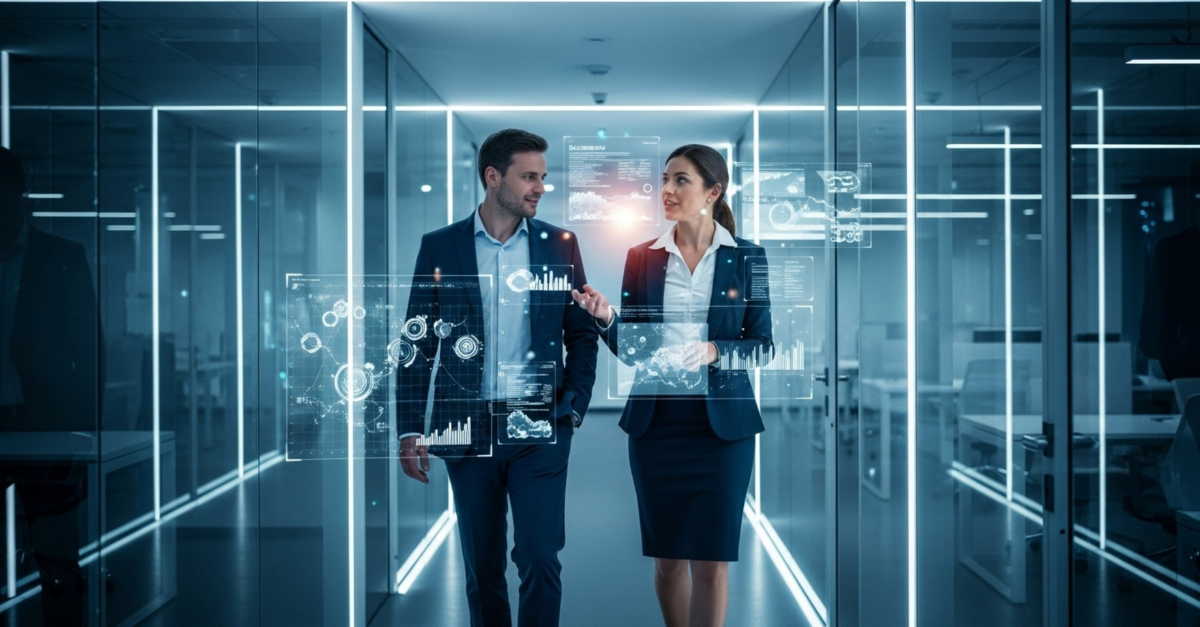
Preparing for 2026: How Businesses Can Secure the Future of Work
Remote work didn’t replace the workplace — it redefined it. As we move into 2026, most organizations are no longer debating if hybrid and distributed work models will continue, but how to support them securely, reliably, and sustainably.
For healthcare systems, schools, and commercial or industrial organizations alike, the modern workplace is now a blend of physical facilities, digital environments, remote endpoints, and cloud-based systems. This evolution has introduced new efficiencies — but also new risks. Safety, security, and communication strategies that once centered on a single building or campus must now extend far beyond four walls.
The organizations that will thrive in 2026 are those preparing today with smarter security, integrated communication solutions, and proactive managed services designed for a connected, flexible workforce.
The New Workplace Reality: Distributed, Digital, and Always On
Hybrid and remote work models are now embedded across industries:
Healthcare relies on off-site administrative staff, telehealth services, and third-party vendors accessing systems remotely.
Education blends in-person instruction with digital learning platforms, remote staff, and shared community spaces.
Commercial and industrial organizations support mobile teams, satellite locations, flexible schedules, and outsourced partners.
This shift has expanded the definition of the workplace — and with it, the attack surface. Security threats no longer stop at the front door. They move through networks, devices, identities, and communication systems.
In 2026, preparedness means treating physical safety, cybersecurity, and communication as one interconnected strategy.
Security in 2026: From Perimeter-Based to People-Centered
Traditional security models were designed to protect buildings. Modern security must protect people — wherever they work.
Key considerations for businesses preparing for 2026:
Identity-based access control
Who is accessing systems matters more than where they are. Multi-factor authentication, role-based access, and credential management are critical for hybrid teams.Integrated physical and cyber security
Video surveillance, access control, intrusion detection, and cybersecurity platforms must work together, providing visibility across physical and digital environments.AI-driven threat detection
Artificial intelligence is increasingly used to identify anomalies, flag suspicious behavior, and reduce response times — especially important when IT and security teams are stretched thin.
For organizations across healthcare, education, and industry, this means moving away from siloed tools toward unified systems that adapt to how people actually work.
Communication Is the Backbone of a Hybrid Organization
In distributed environments, communication gaps can quickly become safety gaps.
Emergency alerts, paging, intercoms, nurse call systems, and mass notification tools must reach people whether they are on campus, working remotely, or moving between locations.
In 2026, effective communication systems must:
Deliver real-time alerts across multiple channels (mobile, desktop, overhead paging, digital signage)
Support both daily operations and emergency response
Integrate with security systems to trigger automated notifications
Remain intuitive for users — even under stress
For hospitals, this could mean ensuring care teams receive urgent notifications regardless of location. For schools, it means reaching staff and administrators instantly during an incident. For businesses, it means maintaining continuity and accountability during disruptions.
The Role of AI: Efficiency, Insight, and New Responsibilities
AI is no longer experimental — it is operational. In 2026, businesses will increasingly rely on AI to:
Monitor system performance
Detect unusual activity
Automate alerts and workflows
Reduce false alarms and alert fatigue
But AI also introduces new responsibilities. Systems must be properly configured, monitored, and maintained to ensure accuracy, compliance, and trust.
AI does not replace human oversight — it amplifies it. Organizations that pair intelligent systems with expert management will see the greatest benefits.
Why Managed Services Matter More Than Ever
As systems grow more complex, many organizations face the same challenge: they don’t have the internal resources to manage everything effectively.
That’s where managed services become essential.
In 2026, managed services are no longer just about maintenance — they are about resilience.
Managed services help organizations:
Ensure systems are monitored, tested, and updated continuously
Maintain compliance with evolving codes and regulations
Detect issues before they become failures
Reduce downtime and operational risk
Support lean IT and facilities teams
For hospitals, schools, and businesses alike, managed services provide peace of mind in an always-on environment.
Preparing for 2026: Practical Steps for Organizations
To prepare for the future of work, organizations should consider:
Assessing existing security and communication systems for gaps in hybrid coverage
Integrating systems to eliminate silos between physical security, communication, and IT
Modernizing access control and alerting tools to support remote and mobile users
Leveraging AI-enabled solutions responsibly to improve visibility and response
Partnering with a trusted advisor who can provide long-term managed services and strategic guidance
Preparation is not a single upgrade — it’s an ongoing commitment.
A Future Built on Connection, Safety, and Trust
The workplace of 2026 will be more flexible, more connected, and more technology-driven than ever before. Organizations that invest now in integrated security, intelligent communication, and proactive support will be better positioned to protect their people, maintain continuity, and adapt with confidence.
At Communication Company, we help healthcare systems, schools, and businesses navigate this evolving landscape — delivering solutions that support how people work today and where they’re headed tomorrow.
Because the future of work depends on more than technology. It depends on trust, preparation, and connection.