
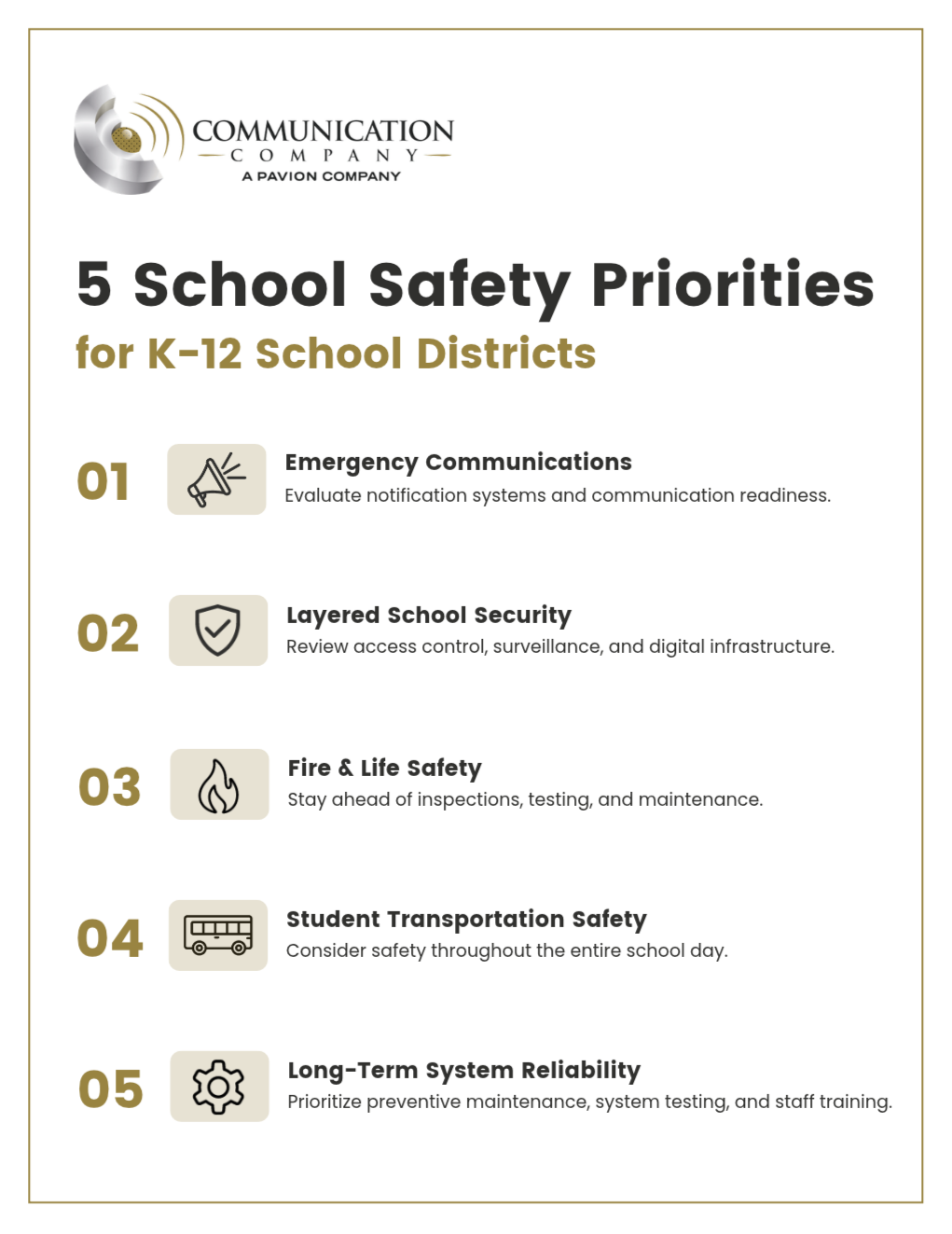
As schools approach the halfway point of the academic year, winter break offers an opportunity to reflect on what's working, identify areas for improvement, and begin planning for the months ahead.
Throughout 2026, we've explored several aspects of school safety, from the reliability of everyday communication systems to preventive maintenance and evolving industry guidance.
What ties these topics together? Effective school safety requires more than investing in the right technology. It also requires ensuring that systems continue to meet the needs of the people who rely on them.
As school districts prepare for 2027, here are five areas worth revisiting.
1. Evaluate Your Emergency Communication Systems
A school's communication system serves two important purposes: keeping the school day running smoothly and helping people respond appropriately when an emergency occurs.
But as schedules, staffing, building layouts, and emergency procedures change, communication needs can change with them.
Can administrators communicate with individual classrooms, entire buildings, or multiple campuses? Are emergency notifications accessible to students and staff with different communication needs? Are teachers familiar with the technology available to them?
Integrated school communication solutions, such as Rauland Telecenter U®, bring together intercoms, paging, bell scheduling, synchronized clocks, and emergency notification capabilities. Centralized management and real-time mapping features can also help authorized personnel maintain greater awareness across their facilities.
Reviewing these capabilities alongside existing emergency procedures can help identify where additional training, system adjustments, or technology upgrades may be needed.
2. Take a Layered Approach to School Security
The seventh edition of the Partner Alliance for Safer Schools (PASS) Safety and Security Guidelines, released in July 2025, reinforces the importance of a coordinated approach to school security.
From the campus perimeter to individual classrooms, each layer presents different security considerations.
For school districts, this may involve reviewing:
Access control permissions and visitor management procedures.
Video surveillance coverage and system performance.
Door intercoms and communication at building entrances.
The coordination of security systems with emergency notification technology.
The seventh edition also introduces a dedicated digital infrastructure layer, recognizing the growing connection between physical security and cybersecurity.
As more school safety technologies operate over shared networks, collaboration between administrators, facility managers, IT departments, and security professionals becomes increasingly important.
3. Keep Fire and Life Safety Systems Ready
When was the last time your school's fire and life safety systems were evaluated against the current needs of your facility?
Renovations, changes in room usage, and aging infrastructure can all introduce new considerations for fire detection and notification systems.
Earlier this year, we spoke with members of Communication Company's inspection team about the work that goes into preparing schools for a new academic year. Their experiences highlighted the importance of proactive inspections, effective communication, and coordination with school personnel.
While summer is often a busy period for school inspections, fire and life safety readiness is a year-round responsibility.
Communication Company supports educational facilities through Siemens fire alarm technology, monitoring, testing, inspections, and ongoing service. Planning ahead for required inspections and addressing outstanding maintenance needs can help minimize disruption during the school year.
4. Consider Safety Throughout the School Day
School safety planning often focuses on what happens inside the building. However, arrival, dismissal, student transportation, and after-school activities deserve consideration as well.
Recent transportation safety guidance from PASS encourages districts to evaluate the people, procedures, and technologies that support students as they travel to and from school.
These environments may involve different personnel, communication challenges, and emergency response protocols than those found inside a classroom.
As districts review their safety plans for 2027, it's worth considering how transportation procedures, campus security, and emergency communication systems work together.
Are responsibilities clearly defined? Are communication procedures consistent? Do existing technologies adequately support the needs of these environments?
5. Prioritize Long-Term System Reliability
Technology investments don't end with installation.
A speaker that becomes difficult to hear, an outdated access permission, or a recurring system trouble notification may seem like a minor inconvenience. Over time, however, these issues can affect confidence in the systems that students and staff depend on.
Regular testing, preventive maintenance, software management, and staff training all contribute to long-term system reliability.
Through ComCare service plans and dedicated technical support, Communication Company helps educational organizations maintain their existing infrastructure and plan for future system needs.
Not every school needs a complete technology overhaul in 2027. Sometimes, the most valuable improvements begin with making better use of the systems already in place.
Preparing Your School for the Year Ahead
Every school district has different facilities, resources, and safety priorities. Understanding where your systems are today can help you make more informed decisions about where to invest tomorrow.
From Rauland school communication solutions and Siemens fire alarm systems to access control, video surveillance, and ongoing technical support, Communication Company works with educational organizations to develop integrated solutions that meet their unique needs.
As you prepare for 2027, our team is here to help you evaluate your existing infrastructure, identify opportunities for improvement, and support safer, more connected learning environments.
Explore Our Education Solutions or contact a member of our team to discuss your school's safety, security, and communication needs.
